There are three ways to protect an existing cable route from fire without replacing the cable: coat it, wrap it or box it in. Each has a place. A coating is the lightest and cheapest and follows the cable wherever it goes; a wrap gives a higher circuit-integrity rating on a defined length; an enclosure gives the highest rating and protects the cable from everything, at the cost of weight, space and access. Most real projects use more than one. This article compares the three on the criteria that decide a specification — rating, weight, cost, access, environment and inspection — and shows how they are combined on a typical route.
The three options
Coatings
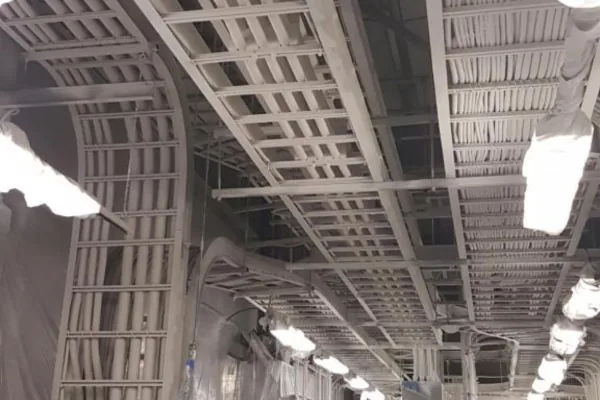
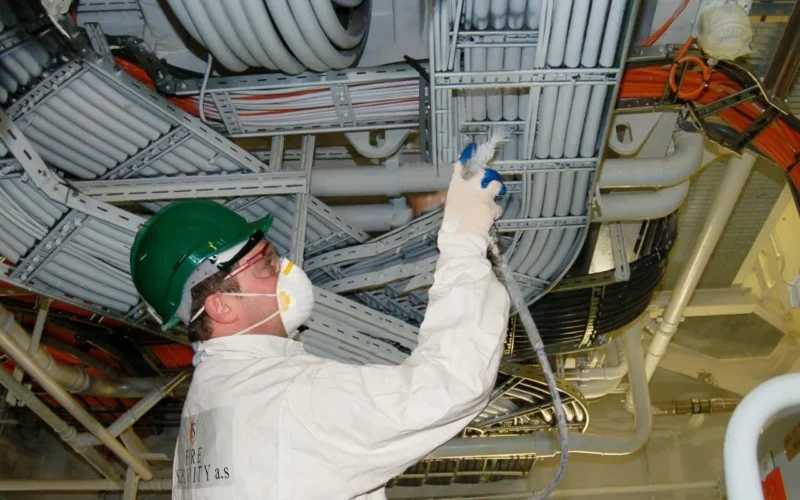
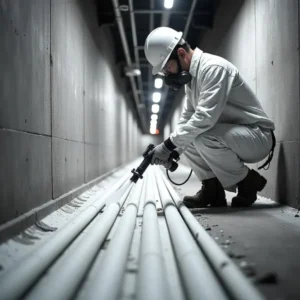
Intumescent and ablative coatings are applied as a liquid to the cable bundle and tray and dry to a flexible film. They limit flame spread along the run and, with the right product and loading rate, keep circuits alive for a tested period — up to three hours at 830 °C for the best intumescent systems, and sustained protection to 1100 °C for hydrocarbon-rated systems. They add little weight, need no additional support, follow every bend and drop, and allow new cables to be added and coated. Their limitations are that the rating depends on correct application, that the char of an intumescent needs room to expand, and that thin films are vulnerable to mechanical damage in traffic areas.
Fire-rated wraps
Flexible wraps are blankets of ceramic or mineral fibre, sometimes with an intumescent or foil facing, wound around a cable bundle or a tray and secured with bands or wire. Two or three layers can give a 1- to 2-hour circuit-integrity rating on unprotected cables, and wraps are also used to protect the cable where it passes through a fire-rated wall as part of a firestop system. They are thicker and heavier than a coating, so tray supports must be checked, and each wrapped section has to be closed off at its ends and at every branch, which makes them best suited to defined lengths — a riser, a run through a high-fire-load room, the last few metres into a fire pump panel — rather than whole basements.
Enclosures
Fire-resistant boards — calcium silicate, gypsum-based or mineral wool composites — fixed to a frame around the tray form a rated enclosure or duct. Tested systems provide 1 to 4 hours of protection against a cellulosic fire and, with the right board, hydrocarbon ratings as well. The enclosure protects the cable from fire, impact, moisture and rodents, but it is the heaviest and most expensive option, needs space around the tray, requires its own structural support, and makes adding a cable a matter of opening and reinstating the enclosure. Enclosures are used where the rating or the mechanical protection cannot be achieved any other way.
Comparison
| Criterion | Coating | Wrap | Enclosure |
|---|---|---|---|
| Flame spread control | Excellent, whole route | Good on wrapped length | Complete on enclosed length |
| Circuit integrity | Up to 3 h (tested system) | 1–2 h typical | 1–4 h |
| Hydrocarbon rating | Yes, with rated product | Limited | Yes, with rated board |
| Added weight | Negligible | Moderate | High |
| Space needed | None | Some | Significant |
| Adding cables later | Lay and coat | Unwrap and rewrap | Open and reinstate |
| Mechanical protection | Low | Moderate | High |
| Relative cost per metre | Lowest | Medium | Highest |
How they are combined
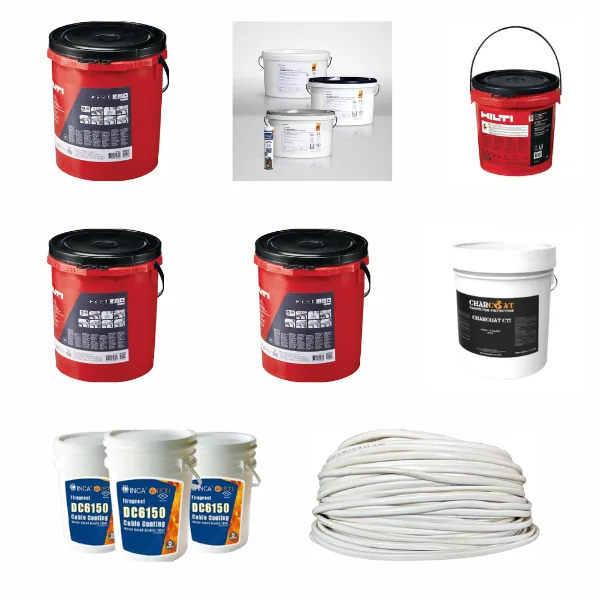
A typical fire-rated route for an emergency circuit — say the power cable from a substation to a fire pump — might use a flame-spread coating on all the trays in the basement it shares with other cables, an intumescent circuit-integrity coating on the dedicated tray through the building, a wrap on the short section where the cable passes through a plant room with a high fire load, and a board enclosure where it crosses an area of mechanical risk or is required by the fire strategy to be fully separated. At every wall and floor the cable passes through a tested firestop seal. The product range we supply covers all four elements — coating materials, firestop sealants and mortars, boards and wraps and the accessories to fix them — so that one supplier is responsible for the whole route and its documentation.
How to decide
- Define the objective for each section: flame spread only, or circuit integrity for a stated period, or hydrocarbon exposure. This comes from the fire strategy and the client standard.
- Check the constraints: tray support capacity, headroom, access for future cables, mechanical risk, moisture and chemical exposure.
- Match to tested evidence: select the system that has a test report for the objective on a comparable cable and tray configuration.
- Price the whole life: a coating is cheapest to install; an enclosure may be cheaper over twenty years if it saves repeated recoating in an exposed location.
- Document it as one system: the coating, wrap, enclosure and firestop on a single route are described together in the specification and the handover schedule.
Our technical specification development service works through exactly this sequence for consultants and contractors, and our article on intumescent versus ablative coatings covers the choice within the coating option in more depth.
If you have a cable route to protect and want a recommendation across all three options, send us the route drawings and the required rating and we will propose a combination and price it.
Where each option is typically used
Coatings are the default for cable basements, trenches, risers and long tray runs in substations, plant buildings and process areas, and for any route where flame-spread control across a whole installation is the objective. They are also the practical choice for existing installations with many cables, because they follow every route without re-supporting the tray. Wraps are used for defined lengths of fire-rated circuit — the run into a fire pump room, a passage through a boiler house or a plant room, a riser section — and as part of firestop systems where cables pass through rated walls. Enclosures are used where the fire strategy requires full separation between diverse feeds, where a route passes through an area of very high fire load or mechanical risk, in tunnels and escape routes where the cables must be protected from the fire and the fire from the cables, and for hydrocarbon zones where the rating cannot be reached by coating alone.
Inspection and maintenance
All three need looking after. Coatings are inspected for damage, thin areas and new uncoated cables, and touched in; wraps for loose bands, open ends and water damage; enclosures for disturbed boards and unsealed reinstatements after cable additions. The firestop schedule and the protection records from handover are the baseline for these inspections, which is one more reason to insist on them. An annual walk-down of the protected routes, recorded against the schedule, keeps the protection at the rating it was installed to and provides the evidence the insurer and Civil Defence ask for at renewal.
Frequently asked questions
Which option gives the highest fire rating?
A tested board enclosure gives the highest ratings, up to 4 hours in cellulosic fire and hydrocarbon ratings with suitable boards. Intumescent coatings reach up to 3 hours in tested systems; wraps typically 1–2 hours.
Is a coating enough on its own for a fire pump cable?
Often, if the coating system is tested for circuit integrity for the required period on a comparable cable and the route has no sections of high fire load or mechanical risk. Where it does, a wrap or enclosure is added on those sections.
Do wraps and enclosures need extra tray support?
Usually. Wraps add moderate weight and enclosures add a lot; tray supports and fixings are checked, and enclosures often carry their own frame.
Can I add cables to a wrapped or enclosed tray?
Yes, but the wrap must be opened and rewrapped, or the enclosure opened and reinstated, to the tested detail. A coated tray only needs the new cable coated.
Which is cheapest?
Per metre installed, coating is the lowest cost, wraps are in the middle and enclosures the highest. Over the service life the answer can change in exposed or high-traffic locations.
Passive fire protection supplier and specialist contractor for electrical cable systems, based in Riyadh. Cable coating materials and application, firestop sealants and mortars, fire-resistant boards and wraps, and the technical documentation that goes with them.
Request a quotation
Send the cable schedule, tray routes, the fire rating required and any drawings. We propose the coating system and loading rate, supply the test and specification documentation, and price supply and application.